What the Corporations Act allows now
The temporary arrangements everyone worked under during the pandemic are gone, replaced by permanent provisions:
- Section 110A sets one technology-neutral test for signatures, wet ink or electronic: identify the signatory, indicate their intention in respect of what is recorded, and be as reliable as appropriate for the purpose.
- Section 127 covers execution by the company, electronically or on paper, and in split form where different directors use different methods.
- Deeds executed under the Corporations Act no longer need a witness, and the old common law rule that a deed had to be on paper in wet ink no longer applies to them.
- Sole director proprietary companies with no company secretary can use the section 127 execution mechanism, which they previously could not.
- Section 126 lets an agent make, vary, ratify or discharge contracts and execute documents, including deeds, for the company.
Circulating resolutions, and why they suit this
Section 248A is the provision that makes board decisions possible without a meeting. Three parts of it matter here:
- Everyone entitled to vote signs a document containing a statement that they are in favour of the resolution set out in it.
- Separate copies are expressly permitted under section 248A(2), as long as the wording of the resolution and the statement is identical in each copy. Directors have never needed to sign the same piece of paper.
- The resolution is passed when the last director signs, under section 248A(3), not when it was circulated or when it is later minuted.
Those three map onto Refrendo almost exactly. Each director gets their own link to an identical document. Each one signs in their own time, on a phone if that is where they are. The completion certificate timestamps every signature, so the moment the resolution passed is a recorded fact rather than a reconstruction. Section 248A is a replaceable rule, so check your constitution first: it may set different requirements, and it governs if it does.
Approval before signature, on the same record
Board papers rarely go straight to signature. The CFO confirms the numbers, the company secretary checks the drafting, and only then does it go to the directors. In Refrendo those are steps in the same request, so the resolution reaches the board only after the checks have happened, and the whole chain sits on one audit trail rather than in an email thread that is hard to reconstruct later.
If a director is travelling or conflicted, they can pass their turn to someone else on Team and above, and the record shows both the director who was asked and the person who acted.
Trustees
A corporate trustee is a company, so everything above applies to it. Individual trustees are not covered by the Corporations Act provisions, and fall back on the trust deed and the Electronic Transactions Act in their state. Trust deeds often impose their own execution requirements, including witnessing, and amending a deed is not the same as passing a resolution under it. Read the deed before sending anything, and get advice if it is not clear.
What ends up in the file
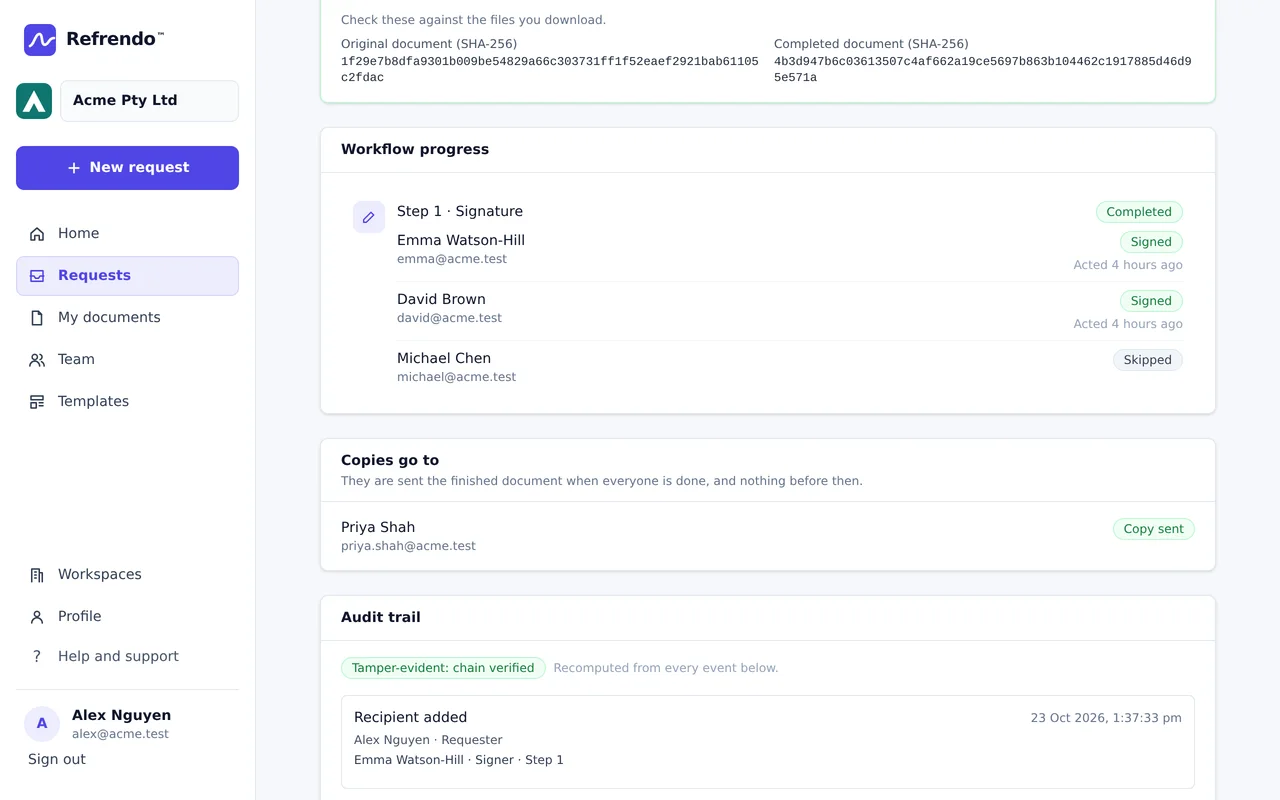
The signed resolution, and a certificate listing each director, what they did, when they did it, how they were identified, and SHA-256 fingerprints of the document before and after signing. Every step is chained to the one before it, so a later edit is detectable. Keep it in the minute book with the resolution.
Where your constitution allows fewer than every director, the signing step can be set to a quorum (Business and above), and once enough have signed the others are no longer asked. The request records that too:
This is general information about signing, not legal advice. Corporations law is detailed and your constitution can change the default position. Check with your company secretary or lawyer before changing how your board executes documents.