Two ways to get one signed
- Send it. Save your NDA as a template with the fields placed, and each one takes a name, an email and a click. Add the company name or the purpose as a detail you fill in, and it is written onto the NDA before they sign.
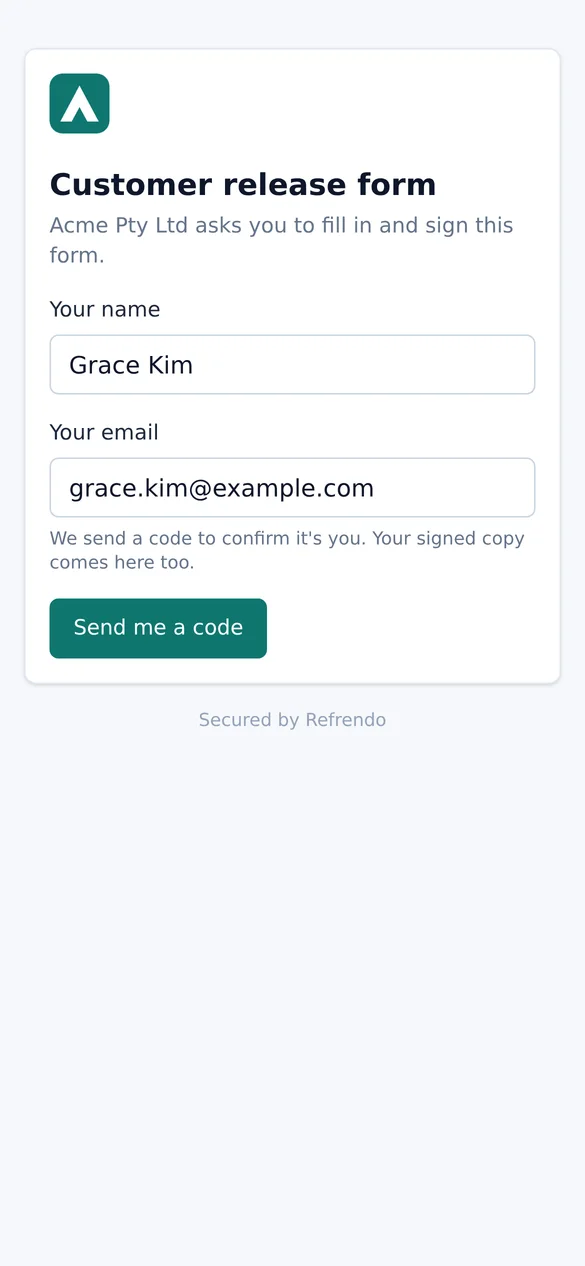
- Let them start it. Turn the template into a public form link. Business and above Put it in the meeting invitation, in your email signature, or on a QR code at reception. The visitor proves their email with a code, fills in their details and signs before they arrive.
Mutual NDAs
When both sides give confidential information, both sign. Put the other party first and your signatory after them, so your side countersigns last, on the version they signed. If the NDA should be checked before it goes out, such as by Legal for one that departs from your standard terms, add an approval step first.
Who signs for a company
A company can sign under section 127 of the Corporations Act by two directors, a director and the company secretary, or a sole director, and the other side can then rely on the assumptions in section 129. A company can also sign through someone it has authorised, such as a manager, under section 126. For an NDA that matters, put both of the other company’s signatories in their step.
If yours is a deed
Some confidentiality undertakings are written as deeds, often so they bind without anything given in return. The rules for executing a deed are stricter than for a contract and differ between companies, individuals and states. Follow your lawyer’s advice on how a deed should be executed.
What you keep
The signed NDA, and a completion certificate showing who signed, when, how each was identified, and fingerprints of the document before and after signing. If the NDA is disputed, the certificate shows which version was signed, and by whom.
This is general information, not legal advice. Check your NDA with your lawyer before you rely on it.